Car series

In July, Ford announced that CATL will supply Lithium Iron Phosphate (LFP) lithium-ion battery cells for four of its electric vehicles, but the implementation of the partnership requires careful analysis.
CATL was expected not only to import LFP batteries from China but also to produce them locally in North America.
The Chinese manufacturer was reportedly considering two countries - Mexico and the US, in which Michigan and Virginia were mentioned as the most probable. Canada has not been ruled out.
It is said that the two partners might introduce a novel ownership structure, under which Ford would own 100% of the battery factory. Meanwhile, CATL would operate the factory and own the battery manufacturing technology. We don't know whether it's true, but it sounds like some kind of a safety measure for the Chinese partner.
One way or another, the battery plant must be located in the US to take full advantage of the IRA tax benefits ($7,500 federal tax credit for EVs, up to $35/kWh tax credit for local battery cell production) and, on top of that, the materials for battery production must be sourced mostly locally, according to the latest requirements.
There are no official comments on the matter, at least not direct comments. CATL said in a statement that the decision will be "purely based on and only based on business concerns," according to the article. Ford CEO Jim Farley said during Q3 2022 earnings call in October that "Ford could “economically” import lithium iron phosphate, or LFP, batteries from China, but alluded to other options to localize production."
Currently, Ford all-electric vehicles are equipped with NCM lithium-ion battery cells from SK Innovation's SK On and LG Energy Solution.
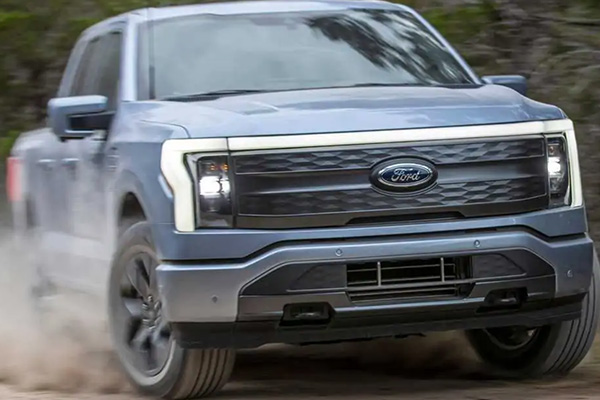
In the future, two electric pickup models and two electric car models will also be equipped with LFP batteries.
The potential North American factory for LFP batteries should be ready for 40 GWh annually starting in 2026. In other words, there is still some time to think.
