Car series

Tesla is planning up to several million units of annual capacity for a lower-priced model.
The model will be a smaller version of the Model Y, for which Tesla is building an annual capacity plan of up to 4 million units. This is an early capacity strategy, and Tesla is signaling to the industry chain that the 4 million units of capacity will be spread across its factories located around the world.
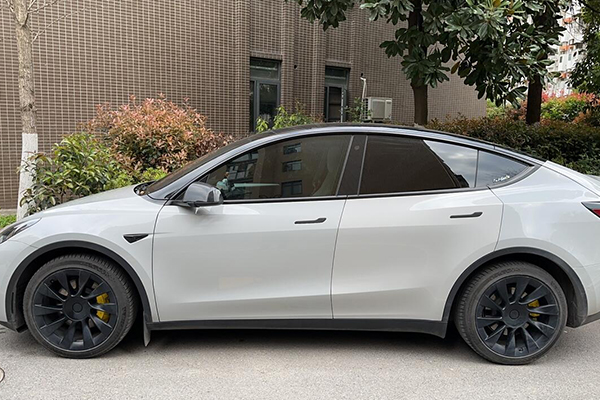
Tesla's North American plants will take on 2 million units of capacity, with the Monterrey, Mexico, plant providing the bulk of the capacity. Its factories in Berlin, Germany, and Shanghai will each take on 1 million units.
Depending on the factory's construction schedule, mass production of Tesla's $25,000 model may not come soon, at least more than a year away.
If Tesla can bring the price of its EVs down to slightly more than RMB 100,000, not only will it gain significant market share for itself, but it will also be a huge push for the maturation of the industry chain, an industry source said, adding that this is when the smart EV industry will see drastic changes.
Tesla delivered 422,875 units worldwide in the first quarter, up 36.39 percent from 310,048 units in the same period last year and up 4.34 percent from 405,278 units delivered in the fourth quarter. Tesla Model 3 and Model Y delivered 412,180 units worldwide in the quarter, and Model S and Model X were 10,695 units.
In China, Tesla has a factory in Shanghai that produces the Model 3 and Model Y. It is the largest Tesla factory in the world, with an annual capacity of about 1.1 million units per year.
Tesla's deliveries in China in January and February were 26,843 and 33,923, respectively, and its Shanghai plant exported 39,208 and 40,479 units in the two months.
