Car series

Chinese brands are dominating the currently small but fast-growing Southeast Asian electric vehicle (EV) market.
Chinese automakers are experiencing rapid growth and outpacing their competitors in the Southeast Asian region, gaining nearly 75 percent of the battery electric vehicle (BEV) market in the first quarter, up from 38 percent a year ago.
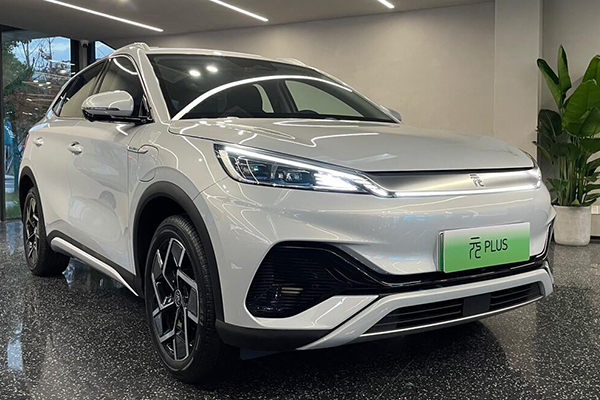
In the first quarter, BYD emerged as the BEV market leader in Southeast Asia, capturing the bulk of sales, followed by Hozon -- owner of the Neta brand -- and SAIC.
Together, these three companies account for more than 68 percent of the BEV market in Southeast Asia, which the report refers to as Indonesia, Malaysia, Myanmar, the Philippines, Singapore, Thailand and Vietnam.
China's Geely Holding Group topped the plug-in hybrid electric vehicle (PHEV) market in Southeast Asia, followed by BMW Group and Mercedes-Benz Group.
BYD's Atto 3 -- known as the Yuan Plus in China -- was the best-selling BEV in Southeast Asia, followed by the Neta V and the Tesla Model Y.
Among PHEVs, Volvo's XC60 was the top seller, followed by the BMW 3 Series and Mercedes-Benz E-Class.
Passenger BEV sales in Southeast Asia grew nearly 10-fold year-on-year in the first quarter, reaching a 3.8 percent share of total passenger vehicle sales, up from 0.3 percent a year ago.
Thailand emerged as the leading country, accounting for more than 75 percent of BEV sales, followed by Indonesia and Vietnam. Thailand also had the highest share of BEVs in total passenger car sales, followed by Singapore and Vietnam.
Thailand's government-led efforts to promote EV sales have yielded positive outcomes, while Indonesia and Vietnam are also performing well in the region. In addition to offering subsidies and tax incentives, the Thai government has set ambitious goals to position itself as a global EV production hub.
