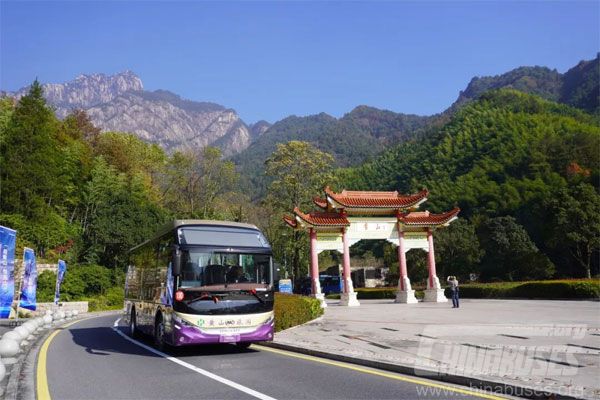
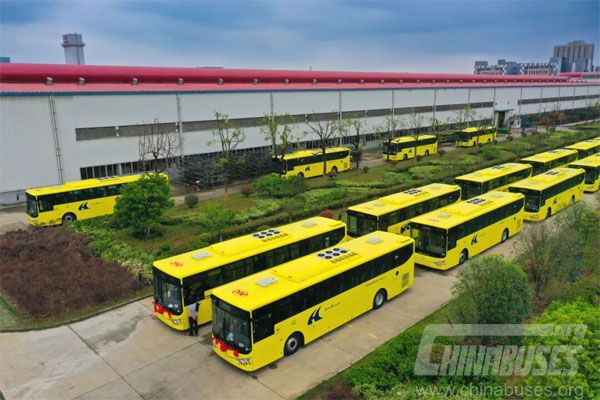
The year 2026 marks the 60th anniversary of Ankai Buses. What began as a small auto repair shop by the Yangtze-Huaihe River has grown into a benchmark bus manufacturer with products sold in over 100 countries and regions worldwide. Anhui Ankai Automobile Co., Ltd. (Ankai Buses) has written an inspiring story of China’s bus industry over six decades. Standing at the historic intersection of the start of the 15th Five-Year Plan and its 60th anniversary, Ankai Buses confidently demonstrates to the world the dynamic transformation from “Made in China” to “Created in China,” from “China Speed” to “China Quality,” and from “Chinese Products” to “Chinese Brands.”
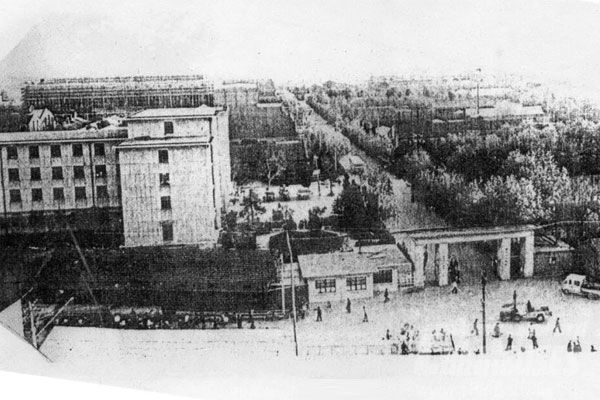 1966 – The predecessor of Ankai Buses, Anhui Provincial State-owned Feihe Auto Repair Factory, was established.
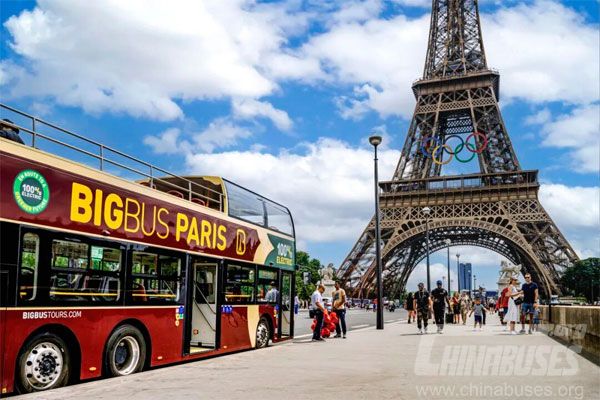 2024 – Ankai’s pure electric double-decker buses were exported to France, providing green and comfortable travel services for global tourists during the Paris Olympics.
Rooted in Core Technology, Breaking “Neck-Choking” Barriers
Core technology cannot be bought – this is a profound lesson from China’s automotive industry. Ankai’s growth is a history of relentless innovation to overcome technical bottlenecks.
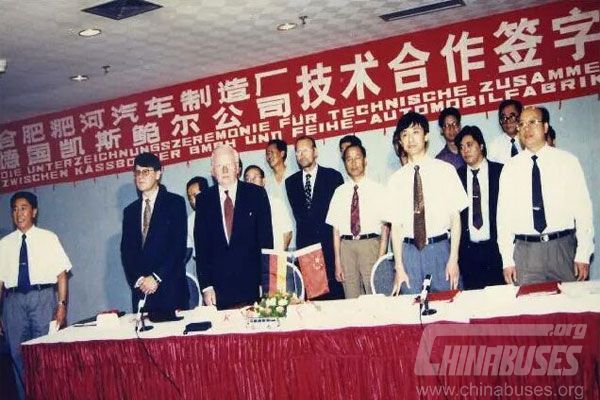
In the late 1980s, when China’s large buses relied heavily on modified truck chassis – compromising safety and comfort – Ankai’s predecessor, Hefei Feihe Automobile Manufacturing Plant, developed 11 models of dedicated chassis for high-end and double-decker buses in 1989. This ended China’s lack of dedicated chassis for large buses. In 1993, Ankai partnered with Germany’s Kassbohrer to produce the S215HD luxury coach, pioneering China’s manufacturing of fully loaded luxury coaches. In 2008, Ankai secured the invention patent for the fully loaded body – a technology that still represents the highest safety standard in China’s bus industry today.
These technical milestones laid the foundation for Ankai’s new energy transformation.
Pioneering New Energy, Leading Green Mobility
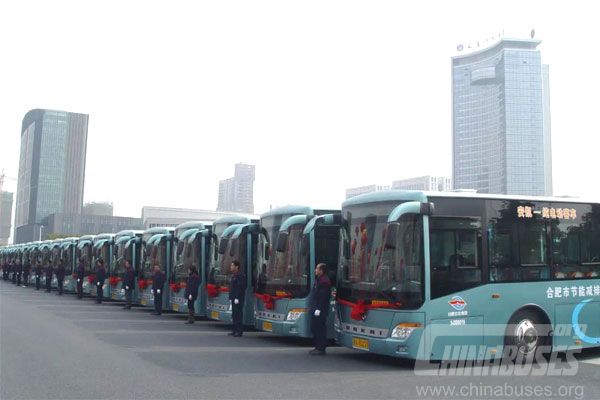
In 2003, while most bus manufacturers were still competing fiercely in traditional fuel vehicles, Ankai took the lead in new energy R&D and became the first Chinese enterprise approved for the production and sale of new energy vehicles. In 2010, 30 Ankai electric buses launched on Hefei Bus Line 18, forming one of China’s first large-scale commercial pure electric bus routes. Over six years of operation, the fleet traveled nearly 8 million kilometers, reducing CO₂ emissions by 9,420 tons.
Filling technical gaps and staying ahead of industry trends, every step of Ankai’s progress is rooted in independent innovation. In 2016, the National Engineering Research Center for Electric Bus System Integration was inaugurated at Ankai – the first national-level engineering research center of its kind in China. Ankai’s pure electric double-decker sightseeing buses, integrating all-aluminum bodies and in-wheel motors, have obtained EU certification and been exported to France, Italy, and Spain. During the 2024 Paris Olympics, these vehicles delivered eco-friendly travel services to global visitors.
Ankai also leads in hydrogen fuel cell buses. In 2019, Anhui’s first hydrogen energy bus demonstration route opened in Lu’an, deploying the first batch of Ankai 8.5-meter hydrogen fuel cell buses. In early 2024, Hefei’s first hydrogen energy bus route added 23 Ankai 10.5-meter hydrogen fuel cell buses. To date, Ankai’s hydrogen fuel cell buses have achieved a maximum single-unit mileage of over 350,000 km, a range of more than 400 km per hydrogen refill, and a refueling time of just 10–15 minutes.
Ankai offers a full lineup of new energy buses (from 5.6m to 13.1m), including city buses, coaches, business buses, tourist shuttles, and double-deckers, with complete coverage of pure electric, plug-in hybrid, and hydrogen fuel cell technologies. It independently masters core component technologies for motors, electronic controls, and in-wheel motor axles.
Global Footprint: From Product Export to Brand & Culture Outreach
Going global means more than selling products – it is about spreading brand and culture. Ankai’s globalization strategy has always emphasized deep roots and sustainable growth.
In 2007, Ankai entered the Saudi Arabian market. In 2011, 3,000 Ankai school buses were exported to Saudi Arabia, setting a record for China’s largest single bus export order that year. In 2022, 800 Ankai buses were exported to Mexico, marking China’s largest single bus export order to Mexico. According to Zhang Huiyong, Assistant General Manager of Ankai’s International Marketing Company and General Manager for the Middle East region, Ankai became the largest bus brand by market share in Saudi Arabia in 2025.
“Overseas business has grown rapidly in recent years – not just in sales volume but also in business model transformation,” said Zhang. Ankai has shifted from pure vehicle exports to KD (knock-down) assembly partnerships, with KD exports accounting for a rising share.
Saudi Arabia exemplifies Ankai’s global strategy. Zhang summarized four key success factors:
Product strength as the entry ticket: Ankai’s R&D team is based in Saudi Arabia, conducting field tests in extreme conditions (50°C heat, frequent sandstorms) to optimize cooling, heat resistance, and design details beyond customer expectations.
Parts & service as the moat: Ankai deploys permanent engineers locally, with 24/7 support during the Hajj pilgrimage, building a nationwide service network and parts warehouses with partners.
Systemic globalization as the direction: From vehicle sales to full industrial chain output (technology + service), Ankai provides comprehensive lifecycle solutions including warranties, maintenance, and operator training. For example, overseas transit staff are invited to Hefei to learn scheduling and management expertise.
Lifecycle solutions as the trend: “Customers increasingly understand that vehicle purchases account for only about 30% of total lifecycle costs, while maintenance and operations make up 70%. We help customers reduce overall costs, turning one-time transactions into long-term partnerships,” Zhang explained.
These best practices are replicated across global markets.
Ankai has also made significant strides in Europe’s high-end market:
2012: Ankai double-decker open-top sightseeing buses served the London Olympics.
2024: Ankai pure electric double-decker buses were exported to France in bulk for the Paris Olympics.
October 2025: Ankai debuted at Busworld Belgium, globally launching the 4th-generation pure electric double-decker sightseeing bus E12S and the micro-circulation bus E60, showcasing China’s green and smart mobility solutions.
Technology as the Foundation, Global Market as the Stage: Smart Driving & Full-Service as Wings
Smart driving and comprehensive services are Ankai’s twin pillars for the future.
Ankai is a pioneer in intelligent driving:
2017: Ankai’s autonomous driving buses began trial operations on public roads in Futian Free Trade Zone, Shenzhen. “The first-generation vehicles achieved L3 autonomous driving capabilities, attracting widespread industry attention,” recalled Li Ren, Director of Ankai’s Intelligent Connected Technology Research Institute. Subsequent second- and third-generation smart vehicles were deployed in Hefei and Suzhou, accumulating approximately 70,000 km of operation in Hefei’s Luogang Central Park.
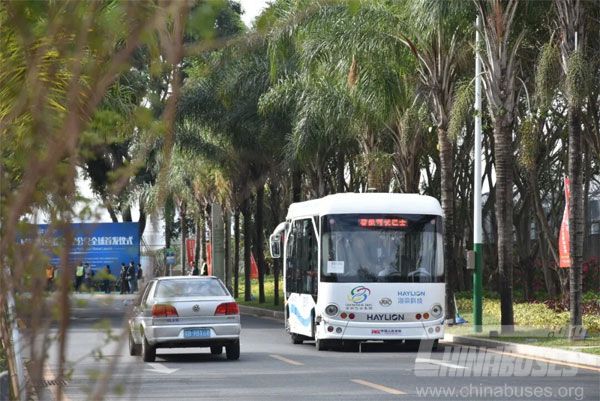
Current autonomous driving features include lane following, autonomous start/stop, cruise control, obstacle avoidance, lane changing, and emergency braking. For the 15th Five-Year Plan, Ankai will upgrade smart cockpits, autonomous driving, and drive-by-wire chassis based on its third-generation vehicles, while accelerating connected services such as vehicle networking and on-demand bus systems. “As China gradually approves L3 conditional autonomous driving vehicles, we are ready to scale from demonstration to commercial use,” Li said.
If smart driving represents technical excellence, Ankai’s service system embodies its brand commitment.
As the first bus manufacturer in China to receive the China Quality Certification Center’s Five-Star After-Sales Service Certification, Ankai has established a “3+1+3” service system: three core systems (maintenance, parts, service support), the “Ankai Home” service brand, and specialized services for both vehicles and new energy systems.
From reactive repairs to proactive care, Ankai’s service excellence has supported major events: the National Two Sessions, G20 Hangzhou Summit, Belt and Road Forum, Boao Forum, Beijing Olympics, Shanghai World Expo, and Hangzhou Asian Games – all delivered with zero errors, high standards, and premium service.
Strong Market Performance, Driven by Technology & Service
Technology and service translate into tangible results:
2025: Total sales reached 8,569 units, with new energy vehicles accounting for 30.4%.
2026: Growth momentum continues, with year-on-year surges in new energy bus sales in Q1.
Conclusion
Sixty years mark a full cycle. At a new historic starting point, Ankai Buses will continue to build on technology, embrace the global market, and innovate with smart solutions – driving toward a broader future in China’s journey to become a transportation powerhouse.