Car series

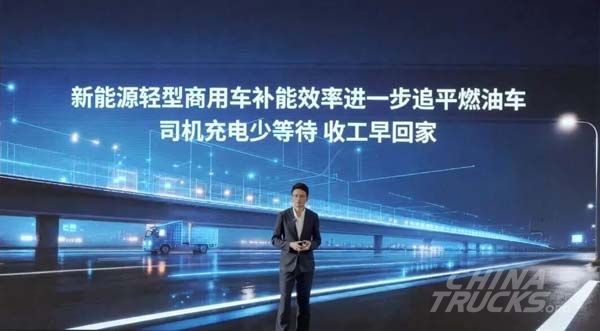
Charging speed, battery lifespan, cold-weather performance, and charging infrastructure have long been key factors affecting the efficiency of electric light commercial vehicles. CATL said the new battery has been developed to address these operational challenges.
Faster Charging, Longer Service Life
The Tianxing II battery supports peak 8C charging, allowing it to charge from a low state of charge to 80% SOC in 6 minutes and 48 seconds, while a full charge takes 8 minutes and 56 seconds.
CATL said the battery is backed by a warranty of up to 10 years or 1 million kilometers. The company has reduced cell internal resistance and optimized battery materials to lower heat generation during fast charging, helping slow battery degradation and extend service life.
Improved Performance in Cold Weather
The new battery is also designed to maintain charging performance in low-temperature environments.
According to CATL, at -20°C, charging takes only 2 minutes and 30 seconds longer than under normal operating conditions, reducing charging time for vehicles operating in cold regions.
New Integrated Charging and Battery Swap Stations
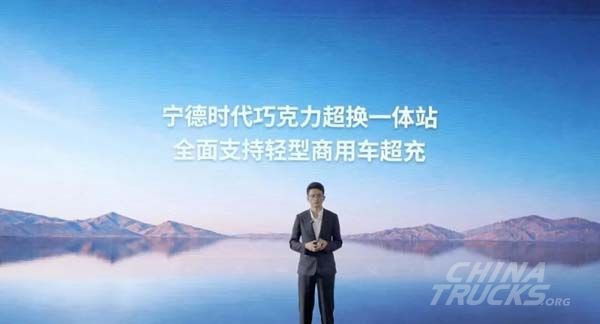
Alongside the battery launch, CATL unveiled a new integrated charging and battery swapping station compatible with both passenger and commercial vehicles.
The stations will be equipped with customized ultra-fast chargers designed for light commercial vehicles. CATL said the charging equipment has also been optimized for vehicle types such as light trucks and vans, including adjustments to charging cable length to improve ease of use.
4,000 Stations Planned This Year
CATL plans to deploy 4,000 integrated charging and battery swapping stations this year, covering nearly 190 cities across China.
The network is intended to support a wide range of logistics applications, including urban distribution, intercity freight, cold-chain transportation, and last-mile delivery.
As deployment of the Tianxing II battery and the new charging network expands, CATL expects electric light commercial vehicles to benefit from faster and more convenient energy replenishment, further improving operating efficiency across the logistics industry.
