Moscow marked another major milestone in the development of sustainable public transport as its 3,000th electric bus entered passenger service. The achievement represented a landmark not only for the Russian capital but also for the country's transport industry as a whole. Within just a few years, electric buses have evolved from an ambitious innovation into an integral part of everyday urban mobility, providing millions of comfortable trips across one of the world's largest metropolitan areas.
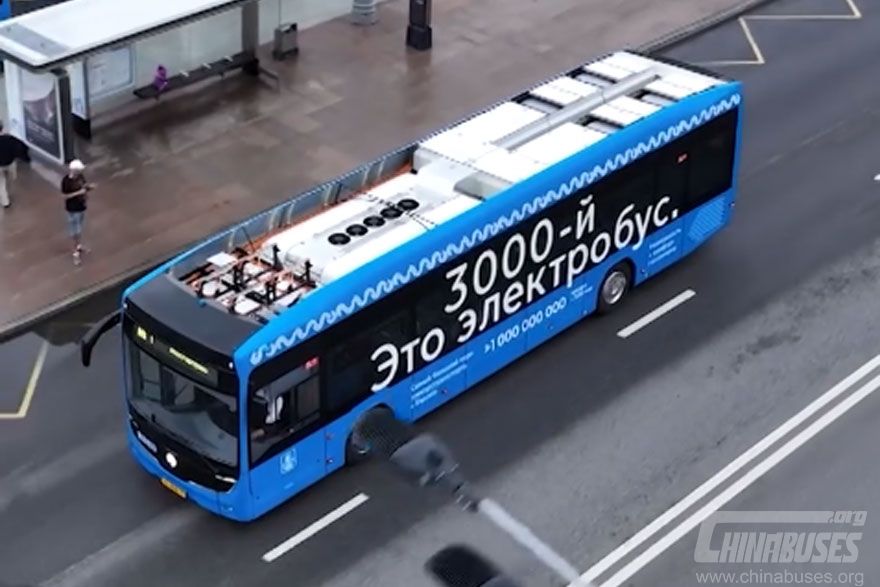
Over recent years, the expansion of environmentally friendly transport has remained one of Moscow's key strategic priorities. The systematic renewal of the city's rolling stock has not only enhanced the quality of passenger services but has also stimulated the development of domestic technologies, engineering expertise, along with advanced manufacturing. Every electric bus currently operating in Moscow has been produced by Russian manufacturers, underscoring the country's growing capabilities in high-tech vehicle production.
Mosgortrans now operates a fleet of more than 3,000 innovative electric buses. As the fleet expanded, so did the route network. Moscow now operates more than 300 electric bus routes, representing roughly one third of the city's entire surface public transport network. As a result, residents across virtually every district have gained access to a quieter, cleaner, more comfortable mode of transport that combines advanced technology with a high standard of passenger service.
The geographical expansion of the network has been equally significant. What began several years ago with a limited number of pilot routes has grown into a citywide system serving every administrative district of Moscow. On Moscow Transport Day, electric buses began operating in Zelenograd for the first time, completing the integration of sustainable transport across the entire capital.
The backbone of Moscow's electric bus fleet consists of vehicles produced by two leading Russian manufacturers. More than 2,430 KAMAZ electric buses now operate alongside over 570 LiAZ vehicles. Fleet renewal has continued at a rapid pace. Since 2025 alone, the city has received more than 500 next-generation A5 electric buses, offering enhanced passenger comfort, improved technical performance, greater operational efficiency.
Infrastructure development has progressed in parallel with fleet expansion. A modern electric transport system depends on a reliable charging network, with Moscow having built one of the world's largest dedicated charging infrastructures for public transport. By the time the 3,000th electric bus entered service, the city had installed 470 ultra-fast charging stations, located both at Mosgortrans operating depots, along with 59 route terminals, enabling vehicles to recharge quickly without disrupting scheduled services.
The growing electric fleet is maintained across 12 specialised operating depots, where vehicles undergo diagnostics, routine maintenance, technical inspections, preparation before entering daily service. The creation of this dedicated maintenance infrastructure has played a crucial role in ensuring the reliability of what has become Europe's largest electric bus fleet.
Since the first electric buses entered service in 2018, passengers have completed more than 1.1 billion trips on the network. This remarkable figure reflects not only the popularity of electric buses among residents but also the growing confidence in sustainable urban mobility as a reliable alternative to conventional diesel-powered transport.
Moscow's ambitions extend well beyond the achievements already reached. By 2030, the city plans to introduce more than 2,300 additional Russian-built electric buses, further modernising its surface transport network, expanding environmentally friendly services, reinforcing Moscow's position as one of the global leaders in electric public transport.
"The number of routes served by electric buses in Moscow continues to grow. Mosgortrans is expanding the city's charging infrastructure, reinforcing Moscow's position as one of the world's leading cities in the development and operation of electric public transport. Since 2018, passengers have already made more than 1.1 billion journeys on electric buses. By decree of the President of the Russian Federation, Mosgortrans was awarded the honorary state distinction 'For Excellence in Labour' in recognition of its outstanding production achievements. The award was presented to the company's workforce by Moscow Mayor Sergey Sobyanin," said Maksim Liksutov.
The launch of Moscow's 3,000th electric bus represented far more than another statistical milestone. It symbolised the profound transformation of the city's transport system over recent years. Through the consistent renewal of its rolling stock, the expansion of charging infrastructure, strong support for domestic manufacturing, the adoption of advanced technologies, Moscow has created a comprehensive electric public transport ecosystem that continues to evolve while setting new benchmarks for large metropolitan areas around the world.

