Car series

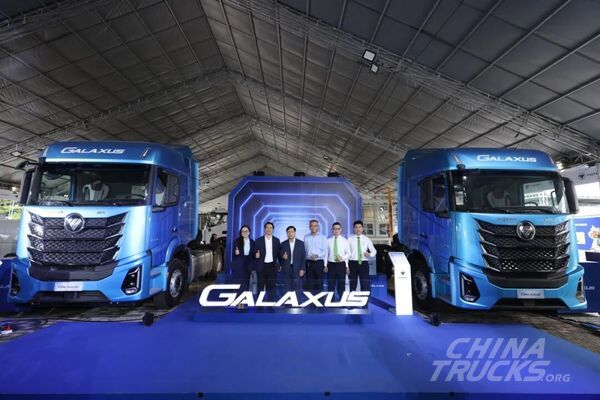
At a special forum on new opportunities in Southeast Asia at the TEDA Automotive Forum in mid-September, Li Bo, deputy general manager of the Import and Export Company at Dongfeng Liuzhou Motor Co., Ltd., shared his views on the changing Vietnamese heavy-duty truck market.
Li expects sales of China-branded medium- and heavy-duty trucks in Vietnam to reach 60,000 units in 2026. He also expects the country's commercial vehicle market to continue growing rapidly over the next five to 10 years.
For Chinese truck makers, the opportunity is not just about exporting more vehicles. They also need to adapt their products to local needs, build local operations and develop their businesses for the long term.
China-Branded Truck Sales in Vietnam Continue to Rise
Sales of China-branded medium- and heavy-duty trucks in Vietnam have grown rapidly. According to Li, sales reached about 10,000 units in 2023, doubled to 20,000 in 2024 and rose to 40,000 in 2025. He expects sales to reach 60,000 units in 2026, even under a conservative estimate.
Vietnam's economic growth is a major driver of this demand.
The country covers about 330,000 square kilometers, roughly the size of China's Yunnan Province, and has a population of about 110 million, close to that of Shandong Province. Its GDP reached US$510 billion in 2025, similar in size to China's Jiangxi Province.
Vietnam's economy has grown at an annual rate of around 7% to 8% in recent years. Its urbanization rate is about 45%, compared with 67% in China, leaving room for further development.
Vietnam is also moving up the manufacturing value chain. Its economy once relied heavily on labor-intensive industries such as clothing, footwear and bags. It has since expanded into electronics manufacturing, with companies including Apple, Samsung and Foxconn using Vietnam as an important production base.
Economic growth, industrial development and infrastructure investment are creating new demand for commercial vehicles.
Vietnam currently follows Euro V emission standards, which are comparable to China's China V standards. Although the country originally planned to fully implement Euro V in 2028, new vehicles have been required to meet the relevant standards since 2023. This creates opportunities for Chinese trucks that already meet these requirements. Vietnam is expected to introduce Euro VI standards in 2030.
The market landscape has also changed. European, American, Japanese and South Korean brands once dominated Vietnam's commercial vehicle market. Chinese brands have now become major players.
Dongfeng Liuzhou Motor has performed strongly in the market, with an overall market share of about 25%, ranking second. In the cargo truck segment, its share is close to 60%, ranking first.
Infrastructure Projects Will Drive Demand Over the Next Five to 10 Years
Vietnam's commercial vehicle market has three main segments: tractor trucks, construction trucks and cargo trucks. Each serves different transport needs.
According to Li, tractor trucks account for 51% of the market. They are mainly used for long-distance transport between northern and southern Vietnam, resource transport and port logistics.
Construction trucks account for nearly 30% of the market and are currently the fastest-growing segment. Sales in this segment are expected to double year on year in 2026, driven by major infrastructure projects.
Cargo trucks account for about 20% of the market. Their engine power is typically 50 horsepower lower than that of mainstream Chinese models. Vietnam also has a wider range of drive configurations in demand. In addition to the common 4×2 and 6×2 layouts in China, 6×4, 8×4 and 10×4 trucks are also widely used.
Chinese manufacturers therefore need to develop vehicles that match local road conditions and operating needs rather than simply exporting the same models sold in China.
Li expects Vietnam's commercial vehicle market to maintain strong growth over the next five to 10 years, supported by economic development, urbanization and infrastructure investment.
Several major infrastructure targets are expected to create new demand:
Railways: Vietnam currently has about 2,500 kilometers of railway lines and plans to increase the total to 5,000 kilometers by 2030. Construction of a high-speed railway between Hanoi and Ho Chi Minh City is scheduled to begin next year. The line is expected to be completed in 2035, with a design speed of 350 km/h.
Expressways: The country's expressway network currently covers about 3,000 kilometers, with a target of 6,500 kilometers by 2030.
Ports: Vietnam's ports currently handle about 30 million TEUs a year. This figure is expected to reach 47 million TEUs by 2030.
These projects will increase demand for different types of commercial vehicles. Road and railway construction will support demand for medium- and long-distance tractor trucks, dump trucks for short- and medium-distance transport, and concrete mixer trucks.
Growing port activity will create more opportunities for 4×2 trucks used for short-distance port transport and 6×4 trucks used to carry heavy container loads over longer distances.
Once the Pinglu Canal opens, trade between Chinese and Vietnamese ports is expected to expand further, creating additional demand for cross-border transport vehicles.
Urbanization and rising consumer spending will also support demand for parcel transport, box trucks and urban delivery vehicles. These applications include tractor trucks for parcel logistics, large single-axle box trucks and light trucks for city deliveries.
However, rapid growth also brings challenges. Competition is intensifying in segments such as construction trucks and light trucks, with greater pressure on prices and products. Fast market growth is also increasing demand for reliable after-sales service and spare parts.
In addition, changes in tariffs and industrial policies across Southeast Asia could affect vehicle exports and decisions on where to establish knock-down (KD) assembly plants.
Premium Features, Smart Technology and Electrification Are Key Trends
Li sees three major trends shaping Vietnam's commercial vehicle market: higher-end products, smarter vehicles and electrification.
1. Higher-end trucks: More comfort and lower operating costs
Large logistics companies in Vietnam are facing driver shortages. As a result, fleet owners increasingly consider drivers' opinions when purchasing trucks, making driving comfort an important factor.
Features such as air conditioning, comfortable seats and large sleeper berths are attracting more attention. At the same time, customers remain focused on operating costs. Trucks with longer maintenance intervals and more fuel-efficient engines are likely to be more competitive.
As Vietnam expands its expressway network, automated manual transmission (AMT) trucks are also expected to become more common.
2. Smart technology: Helping fleets cut costs
As logistics companies improve fleet management, demand for connected vehicle technology is growing.
Level 2 driver assistance systems can improve safety and transport efficiency. Under suitable operating conditions and where regulations allow, these systems may also help some logistics companies move from two-driver operations to one-driver operations, reducing labor costs.
Safety features such as collision warnings and lane departure warnings are also expected to become more common as regulations and market demand develop.
3. Electrification: Lower energy costs create new opportunities
Vietnam relies heavily on imported diesel. According to Li, diesel costs about RMB 7 per liter, while electricity costs around RMB 0.5 to 0.6 per kWh.
This price difference gives electric commercial vehicles a potential operating cost advantage. However, electrification still faces two major challenges: limited electricity supply and restrictions on land use that make it harder to build charging stations.
Li believes these issues can be addressed as the industry develops and demand grows. He also noted that China has spent the past decade developing new energy vehicles and overseas supply chains. The experience gained in China can help Chinese manufacturers bring mature products and technologies to overseas markets.
Chinese Truck Makers Need to Build Local Operations, Not Just Export Vehicles
To respond to changes in Vietnam, Li outlined four priorities: strong products, localization, forward-looking technology planning and cooperation across the industry.
First, manufacturers need to adapt their vehicles to Vietnam's regulations, road conditions and transport needs instead of simply exporting models designed for China.
Localization should go beyond product changes. Companies also need to develop local manufacturing, product design, after-sales service and spare parts supply. KD assembly can help manufacturers respond to local industrial policies and prepare for possible tariff changes.
Second, companies need a long-term technology plan. Li suggested following an approach used by leading battery manufacturers: test one generation of technology, develop the next and prepare the generation after that. This can help companies respond to future market changes.
Third, Chinese truck makers should work more closely with suppliers when entering overseas markets. Cooperation between vehicle manufacturers and parts suppliers can help build a more complete local supply chain and support long-term operations.
At the end of his speech, Li called on Chinese brands to avoid competing mainly through similar products and price cuts. Instead, they should work together to establish strong Chinese benchmarks in products, technology and brands in Vietnam.
Chinese Commercial Vehicle Makers Step Up Their Vietnam Expansion
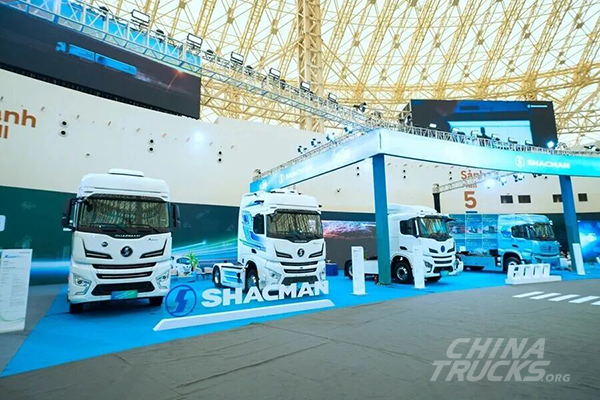
As the market grows, Chinese commercial vehicle manufacturers are accelerating their plans in Vietnam.
On April 25, SANY launched its electric heavy-duty trucks in the Vietnamese market. From July 21 to 22, Shandong Heavy Industry held a global partner conference in Hanoi, bringing together businesses including SINOTRUK, WEICHAI Power and Zhongtong Bus. On September 8, Qingling exported its first batch of new energy EVC61 tractor trucks to Vietnam. On September 17, Dongfeng Liuzhou Motor signed an agreement for a KD plant project in Vietnam, advancing its plans for local manufacturing in Southeast Asia.
These developments show that Chinese manufacturers are moving beyond vehicle exports toward local production, service network development and closer cooperation with suppliers.
Vietnam is not only a fast-growing sales market for Chinese commercial vehicle makers. It is also an important test of their ability to adapt products, manage overseas operations and build local businesses.
In the long run, companies that understand local customer needs, offer suitable vehicles, provide reliable after-sales service and build lasting partnerships with local suppliers will be better positioned to grow in Vietnam.
