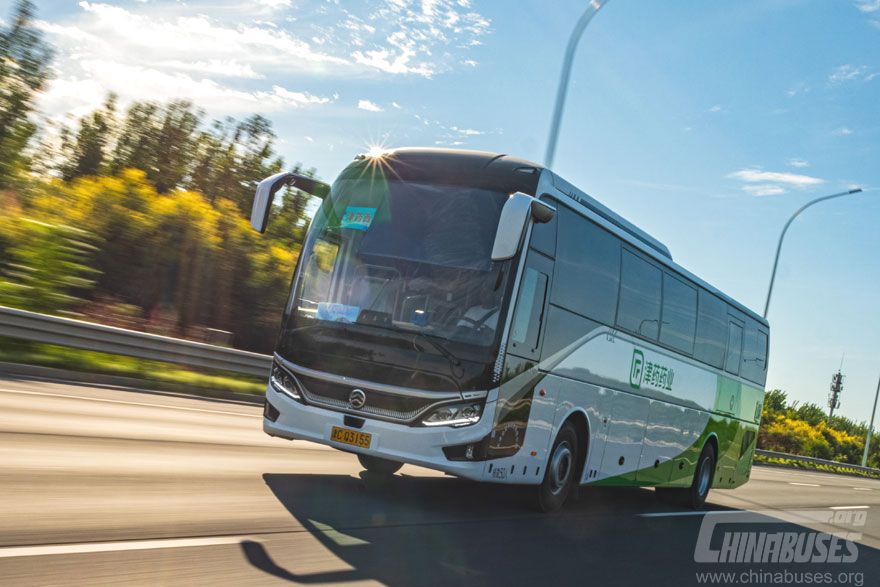
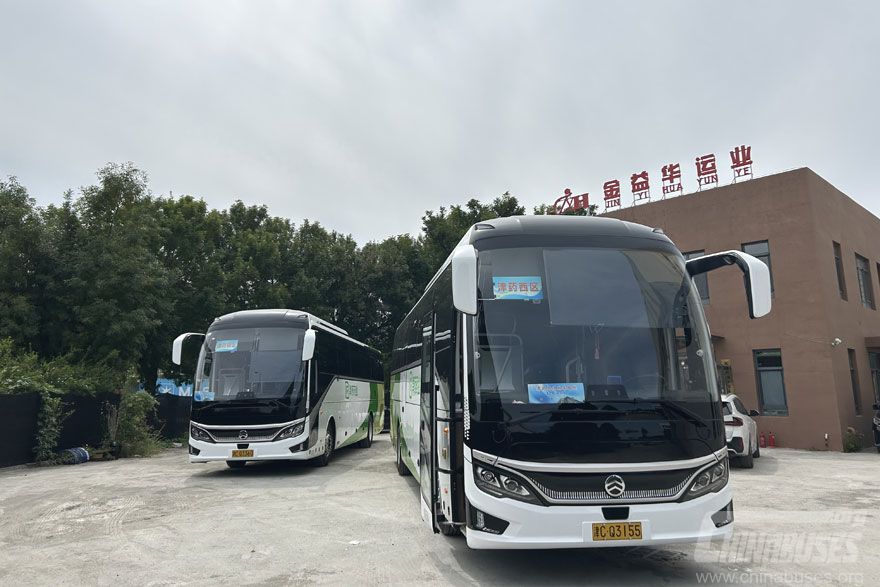
China's road passenger transport industry once enjoyed its golden age, when coaches — with tickets and seats hard to come by — were nothing short of "mobile cash machines". By the time Tianjin Jinyihua Transport Co., Ltd. (hereafter Tianjin Jinyihua) was founded in 2018, however, the afterglow of that era had long faded, and the passenger transport sector was no longer as prosperous as before.
Launching a road passenger transport business at such a challenging time — and focusing specifically on the staff shuttle bus segment — how has Tianjin Jinyihua managed to thrive amid mounting pressure? Faced with difficulties shared across the coach industry, how has Golden Dragon, whose coaches account for 90% of Jinyihua's fleet, helped the operator find a new foothold for growth through continuous product innovation and upgrading?
After visiting Tianjin for an in-depth discussion with Zhai Shigang, General Manager of Tianjin Jinyihua, and test-riding its newly delivered 12-metre Golden Dragon GC shuttle bus, reporters found a new model in which suppliers and operators across the bus value chain support and empower one another.
Following the National Integrated Transport Strategy to Pursue Strategic Transformation
Founded in 2018, Tianjin Jinyihua obtained its road transport operation licence and officially started business in 2019 — only to be immediately hit by the pandemic. Zhai Shigang described the company's early years as indescribably tough. The struggle to survive and grow amid pandemic disruption was an experience shared by countless road passenger transport operators.
These unprecedented challenges also pushed the stagnant industry towards transformation and upgrading. At this critical turning point, Zhai's more than 20 years of management experience at traditional passenger transport enterprises proved invaluable. He clearly realised that Jinyihua could hardly survive if it stuck to the old model, in which travel and shuttle services accounted for a 70/30 revenue split.
This judgement was rooted in his understanding of national policy guidelines. Both the 2017 Guiding Opinions on Deepening Reform and Accelerating the Transformation and Upgrading of Road Passenger Transport and the 2024 Circular on Accelerating the Innovative Development of Customised Scheduled Passenger Services defined the positioning of road passenger transport within China's integrated transport network. Phrases including "connectivity role, differentiated positioning and comparative advantages" were repeatedly highlighted. "My understanding is that the state positions road passenger transport mainly for short-distance connections and staff commuting," Zhai told reporters.
Beyond policy direction, the realities of Tianjin's local passenger market left Jinyihua with little room to spread its limited resources across multiple business lines. "The golden age of conventional road passenger transport, such as the Spring Festival travel rush, is gone, squeezed by rail transit, ride-hailing services and private cars. Custom passenger transport and chartered tour services, popular elsewhere in China, remain niche in Tianjin."
Balancing national transport planning and local market demand, Jinyihua made the decisive call to step away from traditional tour services and channel all resources into the staff shuttle bus market. The firm has now pulled through its difficult start-up phase, with streamlined management and well-configured fleets.
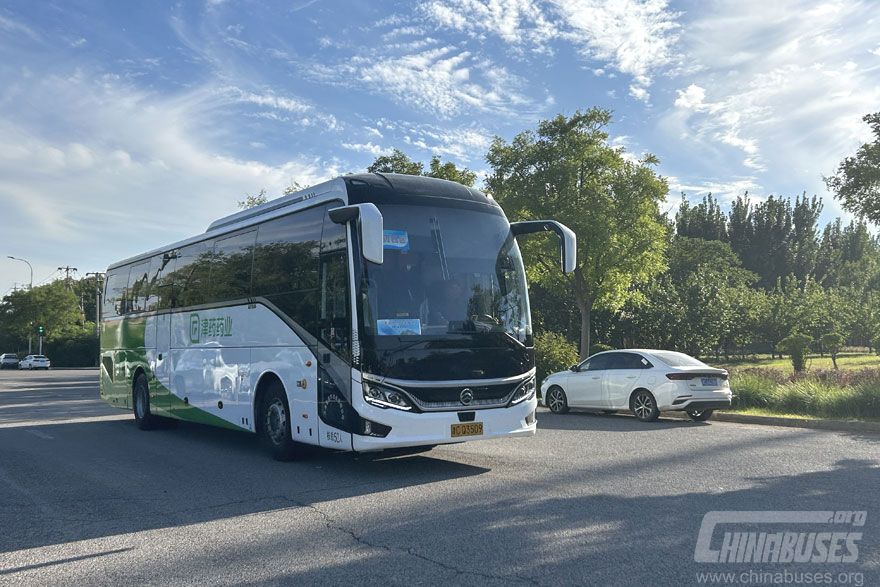
"We won several shuttle contracts with major central and state-owned enterprises in the first half of this year alone, and took delivery of 30 new coaches during that period," Zhai shared. All of these new vehicles are Golden Dragon Qiantu coaches built on its brand-new platform, available in 9m, 11m and 12m variants. Tianjin Jinyihua ranks among the very first customers of the Qiantu range.
Founded eight years ago, Jinyihua now provides stable shuttle services for more than 20 clients in Tianjin, including central and state-owned enterprises, research institutes, universities and Fortune 500 companies, laying a solid foundation for expansion. It operates nearly 100 self-owned coaches, over 90% of which are Golden Dragon vehicles.
Upgrading on Both Sides of Supply and Demand: A New Anchor for Passenger Transport Transformation
A major challenge facing operators and manufacturers alike in today's coach sector is homogenisation. Coach products on the market look and perform similarly, while passenger transport operators struggle to deliver differentiated services. Breaking free from homogenisation has become a core priority for the entire industry.
"No player in traditional passenger transport holds an absolute competitive advantage," Zhai observed. To succeed in the shuttle market and satisfy high-end clients, operators need to focus on two core areas: hardware and service.
Hardware is the foundation of premium shuttle services. "Our company is relatively young, and our strength lies in a high proportion of new vehicles. We have added new coaches to our fleet every year since 2019," Zhai explained. Jinyihua bought Golden Dragon coaches for its very first fleet, and years of repeat orders built deep mutual trust — the key reason he felt confident becoming an early adopter of the brand-new Golden Dragon Qiantu platform.
When selecting coaches, Jinyihua prioritises three factors that directly shape its business: cost control and revenue generation, passenger comfort, and environmental performance. Lower operating costs underpin profitability, while comfort and eco-friendliness help retain corporate clients. In Zhai's view, meeting these three requirements gives shuttle operators solid hardware support to compete.
Jinyihua's requirements reflect typical demands across the urban shuttle bus market. Developed as a next-generation platform, the Golden Dragon Qiantu (GC) addresses these market needs and gives operators a powerful tool to differentiate themselves. Optimised aerodynamics and upgraded powertrains cut energy consumption, while advanced noise reduction, custom interiors and eco-friendly materials lift ride comfort. In Zhai's words, "The Golden Dragon Qiantu is a massive improvement over our previous fleet across every dimension."
With the GC as its reliable hardware backbone, Jinyihua can better deliver high-quality service. The coach's driver-friendly cabin reduces fatigue, making it easier for the operator to implement its "caring service" philosophy and target zero customer complaints. A full suite of human-centred features also supports refined service delivery. The GC coaches earned consistent praise from Jinyihua's corporate clients in safety drills and service assessments.
Striving for Extra Excellence — GC Supports Operators to Go the Extra Mile
More than three months have passed since the first batch of Golden Dragon GC shuttle buses entered service in May, and Zhai has shared real-world operational feedback on this new-generation model.
First and foremost, he is impressed by its outstanding fuel economy. The first 9m and 11m GC coaches deployed on Tianjin commuter routes deliver around 18 L/100km for the 9m variant. Zhai is delighted with the result: "We won this contract in February this year. For the first three months before the new GC coaches arrived, we ran older Golden Dragon models, which consumed 22–23 L/100km. While age and configuration play a part, the GC's fuel saving is still highly noticeable." The 11m GC version, meanwhile, achieves roughly 20 L/100km on the same shuttle routes.
Zhai also tested three 9m GC coaches on long-distance highway runs. Driving empty from Tianjin to Changchun — a trip of nearly 1,000 km — the three coaches averaged 13.1 L/100km. On the return trip with passengers on board, the average stood at 16.8 L/100km. Compared with competing models, its fuel efficiency is exceptional and clearly showcases the strengths of this upgraded platform.
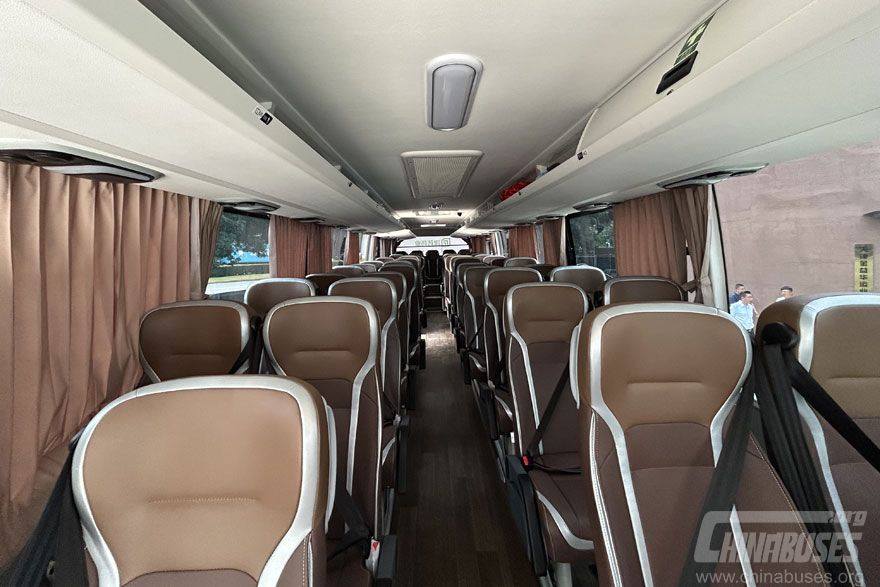
Passenger comfort is another standout strength. Zhai noted that the GC boasts excellent overall noise suppression, solving the long-standing pain point of loud noise and poor comfort for passengers in the last two rows of large coaches. Clients also complimented the generous seat pitch and well-cushioned seats. "Thanks to the eco-friendly materials used throughout the cabin, there is almost no new-car odour; any faint smell disappears within two to three days," he added.
As Zhai pointed out, rapid progress in coach manufacturing means no operator can easily lock in an exclusive competitive edge. But companies can build advantages by outperforming competitors in every detail — better vehicles, stronger management and superior service. The Golden Dragon GC empowers operators to make that extra difference.
The Tianjin Jinyihua case not only brings positive first-hand user testimonials for the Golden Dragon GC, but also offers valuable industry experience: coach manufacturers and transport operators can jointly find pathways for passenger transport transformation by supporting each other.